
A psychiatrist and therapist in private practice
A former clinical proffessor of psychiatry and noted forensic profiler.
He works with Dr. Robert Lands who discovers the language of other 90% of the mind. A protege of Langs' for 35 years, Hodges utilizes the super intelligence in therapy.
Tell me moreThe break-through to ...
The Super Intelligence
The Super Intelligence
Gathering clues from communication - deeper perception. Seeing new meaning in unconscious messages. A paradigm shift in knowledge.
tell me more
tell me more
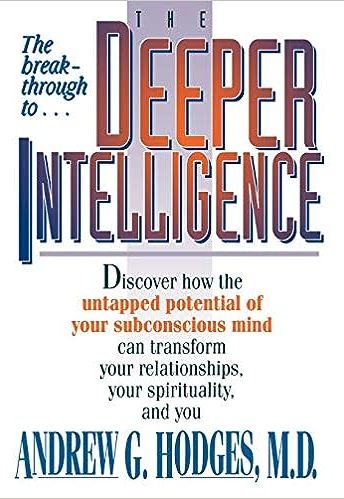
The Cutting Edge of
His cutting-edge psycholinguistic method, "thoughtprint decoding," shows how killers leave behind mental messages much like fingerprints.
tell me moreForensic Profiling
The first person to apply the super intelligence to forensic profiling. The development of thought-print decoding in forensic cases.
tell me moreThe Secret Confession of Amanda Knox
In this eye-opening study of one of the 21st century's most controversial murder cases, Dr. Hodges turns his attention to how Knox unknowingly confessed to the brutal murder of her roommate in great detail.
learn more
learn more

The Cutting Edge of Political Analysis
Using his psycholinguistic technique to read between the lines of leaders' statements Hodges ultimately gets inside the mind of Barack Obama. Analyzing important Obama speeches and letters, he delves into the President's unconscious and decodes his deeper messages.
Read MoreThe Cutting Edge of Success and Sports Management Therapy
Success—getting the best out of ourselves—can be far trickier than we know. Success triggers powerful blind spots often leading to a success retreat. The super intelligence provides the key to recognizing these unconscious blind-spots.
read moreThe Cutting Edge of Decoding Scripture
Hodges explains how Jesus would have seen himself and his mission in the Scriptures,
A truly human portrait of both man and God emerges.
read more
Previous slide
Next slide
Publications
Dr. Hodges’ work has been recognized in the various fields where he has demonstrated the application of the super intelligence. The human mind operating on two levels remains the same from filed to filed. The super intelligence continually communicates whenever human intelligence operates. Such a breakthrough reveals a paradigm shift in knowledge in multiple fields.
From the Blog
Profiling Amanda Knox
November 4, 2015
Hodges’ cutting-edge psycholinguistic method, “thoughtprint decoding,” continues to show how killers leave unique mental messages behind much like fingerprints. He examined a ...
Read More →
Decoding Obama Daily
December 22, 2015
Obama hits ISIS with wet noodle punch Obama said “we’re hitting ISIS harder than ever.” Since he’s not hit ISIS hard at ...
Read More →
Forensic Profiler: Obama Accepts Isis Attacks, Wnd Exclusive
January 17, 2016
‘In fact, he has constructed a new normal by failing to protect America’ January 11, 2016 President Obama, despite his promises ...
Read More →
Acclaim
"Without a doubt, it is one of the most exciting books I have ever read."
(the late) Dr. Robert Schuller
“I have consulted with Dr. Hodges several times regarding cases where written notes were involved. As a retired FBI agent and active Chief of Police I have found his unconscious communication technique to be useful. I think his study of the ransom note in the JonBenet Ramsey case was insightful and found his book to be fascinating.”
Donald Dixon, Chief of Police (Special Agent, F.B.I., retired)Lake Charles, Louisiana
“Dr. Hodges has successfully applied a sound and validated method of decoding the unconscious mind to the world of criminal investigation. This exciting work demands serious consideration.”
Mark McKee, Psy.D.Associate Professor of Psychology - Illinois School of Professional Psychology
"One Of My Favorite Books...Truly A Treasure...An Insightful Masterpiece..."
Paul BraoudakisDirector of Communications, Willow Creek Church
"When we ask ‘Who was this man Jesus?’ no one has answered the question better than Dr. Hodges…”
Mike McManusSyndicated Columnist, Author of “Ethics & Religion”
“Indeed a new type of investigator is on the forensic scene. The discovery of the super intelligence is like the discovery of DNA. Hodges’ profiling method offers us hidden confessions and chilling explanations as to motives when forensic documents or oral interrogations are available.”
(the late) Irving Weisberg, Ph.D, psychologistFaculty member, Adelphi University - Garden City, New York
Previous
Next
Get in touch
Andrew G. Hodges, M.D.
P.O. Box 43068
Birmingham, Al 35243-0068